
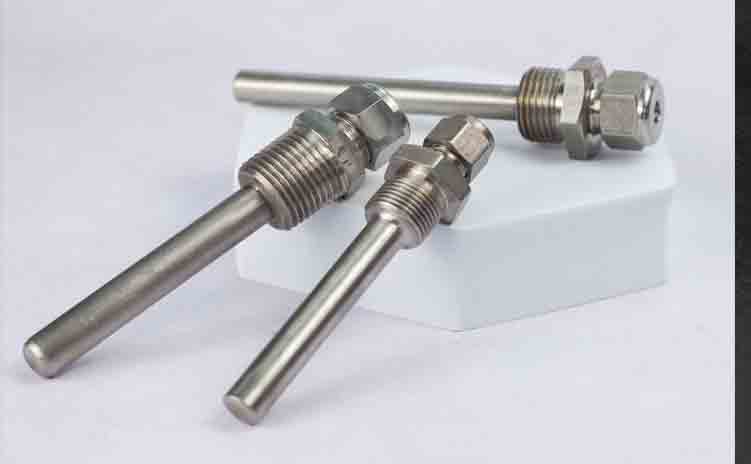
Solid Bar Stock Thermowells
A thermowell is a closed-end pressure-retaining tube that sits in the process line and holds a temperature sensor. It shields the RTD, thermocouple or bimetal thermometer from pressure, flow velocity and corrosive media, and lets the sensor be withdrawn for calibration or replacement without draining or depressurising the line.
Kalpataru thermowells are gun-drilled from a single piece of certified bar, so there is no seam or weld on the wetted stem. Straight, tapered and stepped profiles are offered with threaded, flanged, socket weld / weld-in and sanitary process connections. Wake frequency and stress checks as per ASME PTC 19.3 TW-2016 can be carried out on request from your process data.
- Drilled from solid bar
- Concentric, straight bore
- Straight, tapered & stepped
- Sensor change without shutdown
- Wake frequency check on request
- Heat code traceability
Thermowell Types
By Process Connection
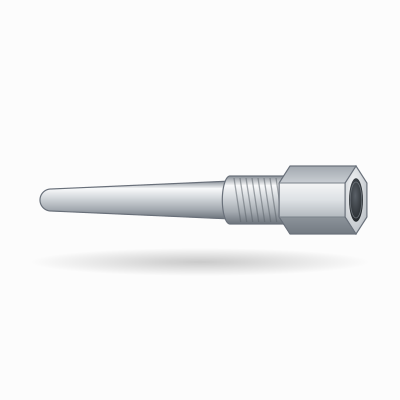
Threaded Thermowell
Screws directly into a threaded coupling or boss on the line. The most economical choice for utilities, moderate pressures and non-critical services where a flange is not required.
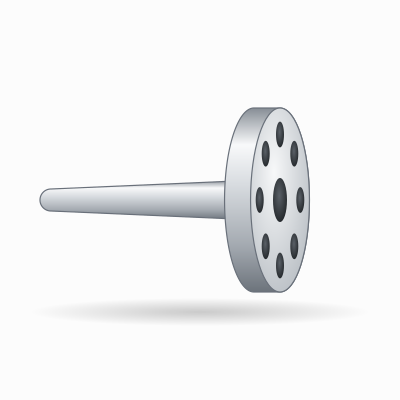
Flanged Thermowell
Stem is full-penetration welded to, or machined integral with, a raised face or RTJ flange. Easy to remove and preferred for corrosive, high pressure and refinery services.
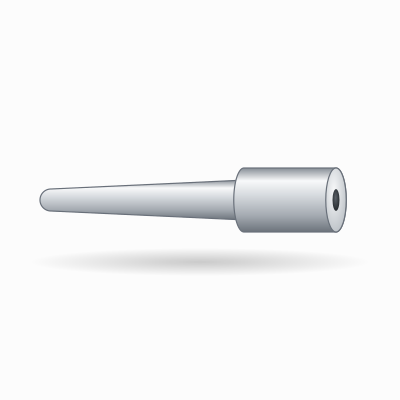
Welded Thermowell
Socket weld or weld-in thermowells welded directly into the pipe or vessel for a permanent, leak-free installation on high pressure, high temperature steam and gas lines.
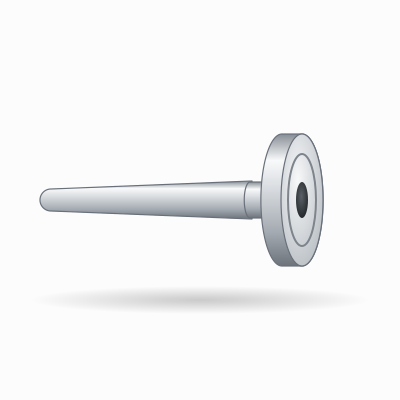
Sanitary Thermowell
Tri-clamp style connection with a smooth, polished wetted surface and no crevices, for hygienic food, dairy, beverage and pharmaceutical processes that need regular cleaning.
Technical Specifications
| Product | Thermowells — threaded, flanged, welded (socket weld / weld-in) and sanitary |
|---|---|
| Construction | Gun-drilled from solid bar stock; flanged wells with full penetration weld or integral machined |
| Threaded Connection | 1/4", 3/8", 1/2", 3/4", 1" — NPT, BSP / BSPP, BSPT & others on request |
| Flange Size | 1/2" to 3" ANSI (ASME B16.5) and DN25 to DN100 DIN (EN 1092-1) |
| Pressure Rating | 150#, 300#, 600#, 900#, 1500# ANSI and PN10 to PN100 |
| Stem Profile | Straight, tapered and stepped |
| Bore Size | 6.6 mm (0.260") for 6 mm / 1/4" sensors, 8.5 mm for 8 mm sensors; others on request |
| Instrument Connection | 1/2" NPT female standard; 3/4" NPT, M20 × 1.5 & others on request |
| Material | SS 304, SS 316, SS 316L, Inconel, Monel, Hastelloy C & others on request |
| Options | NACE MR0175 / MR0103 compliance, PMI, third party inspection (TPI), X-ray (radiography) of welds, cap & chain |
| Design Check | Wake frequency and stress calculation as per ASME PTC 19.3 TW-2016 can be checked on request |
| Certificates | EN 10204 3.1 material certificate, hydrostatic test certificate, third party inspection on request |
Material Grades
Stainless Steel
Nickel Alloys
| Material | UNS No. | Bar Stock | Forgings / Flanges |
|---|---|---|---|
| SS 304 | S30400 | ASTM A479 / A276 | ASTM A182 F304 |
| SS 316 | S31600 | ASTM A479 / A276 | ASTM A182 F316 |
| SS 316L | S31603 | ASTM A479 / A276 | ASTM A182 F316L |
| Monel 400 | N04400 | ASTM B164 | ASTM B564 |
| Inconel 600 | N06600 | ASTM B166 | ASTM B564 |
| Inconel 625 | N06625 | ASTM B446 | ASTM B564 |
| Hastelloy C-276 | N10276 | ASTM B574 | ASTM B564 |
Chemical & Mechanical Properties
| Grade | C | Mn | Si | P | S | Cr | Ni | Mo | Others |
|---|---|---|---|---|---|---|---|---|---|
| SS 304 | 0.08 | 2.00 | 1.00 | 0.045 | 0.030 | 18.0–20.0 | 8.0–10.5 | — | N 0.10 |
| SS 316 | 0.08 | 2.00 | 1.00 | 0.045 | 0.030 | 16.0–18.0 | 10.0–14.0 | 2.0–3.0 | N 0.10 |
| SS 316L | 0.030 | 2.00 | 1.00 | 0.045 | 0.030 | 16.0–18.0 | 10.0–14.0 | 2.0–3.0 | N 0.10 |
| Monel 400 | 0.30 | 2.00 | 0.50 | — | 0.024 | — | 63.0 min | — | Cu 28.0–34.0, Fe 2.5 |
| Inconel 600 | 0.15 | 1.00 | 0.50 | — | 0.015 | 14.0–17.0 | 72.0 min | — | Fe 6.0–10.0, Cu 0.50 |
| Inconel 625 | 0.10 | 0.50 | 0.50 | 0.015 | 0.015 | 20.0–23.0 | 58.0 min | 8.0–10.0 | Nb+Ta 3.15–4.15, Fe 5.0 |
| Hastelloy C-276 | 0.010 | 1.00 | 0.08 | 0.04 | 0.03 | 14.5–16.5 | Balance | 15.0–17.0 | W 3.0–4.5, Fe 4.0–7.0 |
| Grade | Tensile Strength (MPa, min) | Yield Strength 0.2% (MPa, min) | Elongation (%, min) | Hardness (max) |
|---|---|---|---|---|
| SS 304 | 515 | 205 | 40 | 201 HB |
| SS 316 | 515 | 205 | 40 | 217 HB |
| SS 316L | 485 | 170 | 40 | 217 HB |
| Monel 400 | 480 | 170 | 35 | — |
| Inconel 600 | 550 | 240 | 30 | — |
| Inconel 625 | 827 | 414 | 30 | — |
| Hastelloy C-276 | 690 | 283 | 40 | — |
| Grade | Density (g/cm³) | Melting Range (°C) | Key Characteristic |
|---|---|---|---|
| SS 304 | 8.00 | 1400–1450 | General corrosion resistance, economical |
| SS 316 / 316L | 8.00 | 1375–1400 | Molybdenum for chloride & pitting resistance |
| Monel 400 | 8.80 | 1300–1350 | Sea water, hydrofluoric acid service |
| Inconel 600 | 8.47 | 1354–1413 | High temperature oxidation resistance |
| Inconel 625 | 8.44 | 1290–1350 | High strength, crevice corrosion resistance |
| Hastelloy C-276 | 8.89 | 1325–1370 | Severe oxidising & reducing chemicals |
Design & Dimension Tables
Stem Profile Comparison
| Profile | Shape | Strength / Vibration Resistance | Response Time | Typical Use |
|---|---|---|---|---|
| Straight | Same OD from root to tip | Good; lowest natural frequency of the three for the same length | Slower (more metal at tip) | Low velocity liquids, utilities, general service |
| Tapered | OD reduces gradually from root to tip | Highest stiffness-to-weight; best for high velocity flow | Good | Steam, gas and high velocity process lines |
| Stepped | Larger OD at root, reduced OD near tip | Good, with higher natural frequency than straight | Fastest (thin tip section) | Where quick response is needed at moderate velocity |
Standard Bore & Tip Thickness
| Sensor Diameter | Bore Size | Typical Tip Thickness | Typical Tip OD | Typical Root OD |
|---|---|---|---|---|
| 6 mm / 1/4" RTD or TC | 6.6 mm (0.260") | 6.4 mm (1/4") | 16 mm (5/8") | 22 mm (7/8") tapered / 16 mm straight |
| 6 mm / 1/4" — heavy duty | 6.6 mm (0.260") | 6.4 mm (1/4") | 19 mm (3/4") | 27 mm (1-1/16") |
| 8 mm sensor / bimetal stem | 8.5 mm | 6 mm | 18 mm | 24 mm |
| 3 mm mineral insulated TC | 3.5 mm | 4 mm | 10 mm | 14 mm |
Flange Size & Rating Availability
| Standard | Sizes | Ratings | Facing |
|---|---|---|---|
| ASME B16.5 (ANSI) | 1/2", 3/4", 1", 1-1/2", 2", 3" | 150#, 300#, 600#, 900#, 1500# | RF / RTJ / FF |
| EN 1092-1 (DIN) | DN25, DN32, DN40, DN50, DN80, DN100 | PN10, PN16, PN25, PN40, PN63, PN100 | Type B1 / B2 raised face |
| Most common in instrumentation | 1", 1-1/2" ANSI / DN25, DN40 | 150# – 600# / PN16 – PN40 | RF |
Immersion Length Guidance
| Line Size | Suggested Immersion ("U" length) | Guidance |
|---|---|---|
| 2" (DN50) | ≈ 50–65 mm | Install in an elbow or on an enlarged section where possible to gain length |
| 3" (DN80) | ≈ 65–100 mm | Tip in the central third of the pipe |
| 4" (DN100) | ≈ 100–125 mm | Tip near pipe centreline |
| 6" (DN150) | ≈ 125–150 mm | Sensitive length fully immersed in the flow |
| 8" and above | ≈ 150–250 mm | Keep immersion as short as the accuracy allows to limit vibration risk |
Where Our Thermowells Are Used
Refinery & Petrochemical
Power Plant Steam Lines
Oil & Gas Production
Chemical Reactors & Vessels
Pharmaceutical Processing
Food, Dairy & Beverage
HVAC & Chilled Water
Boilers & Heat Exchangers
Features & Advantages
One-Piece Bar Stock Stem
Gun-drilled from solid bar with no seam or weld on the wetted stem, giving the full pressure strength of the material.
Concentric Bore
Controlled drilling keeps the bore straight and wall thickness even, so sensors slide in freely and heat transfer is uniform.
Wake Frequency Check
Share flow velocity, density, pressure and temperature and we can check the design against ASME PTC 19.3 TW-2016 on request.
Tested & Traceable
Hydrostatic testing, PMI, weld radiography and third party inspection available, with heat numbers marked on every well.
Frequently Asked Questions
Why is a wake frequency calculation important?
Should I choose a straight, tapered or stepped thermowell?
What bore size do I need?
Can you supply thermowells for sour service?
Related Products
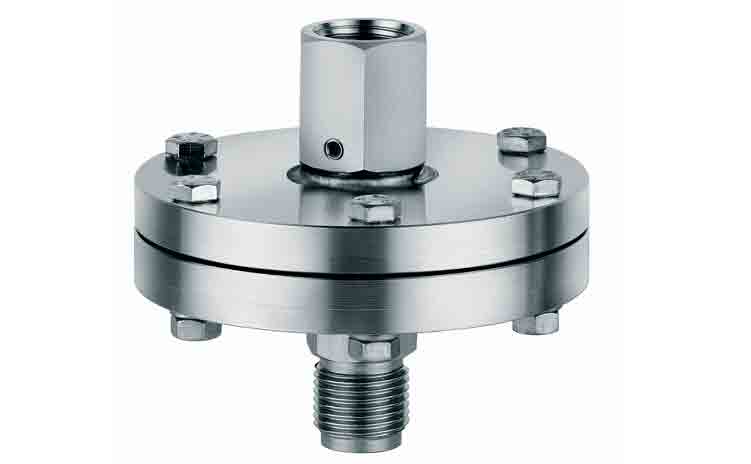 068 Types
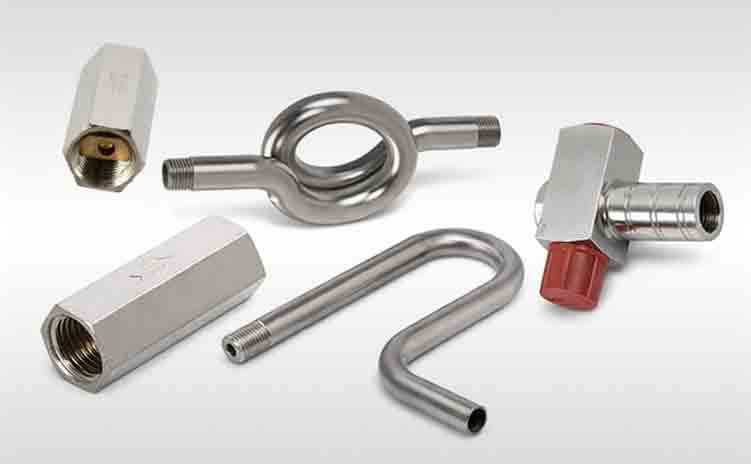 048 Types
Pressure Gauge Accessories
Snubbers, gauge cocks, gauge savers, syphons and cooling towers.
View Product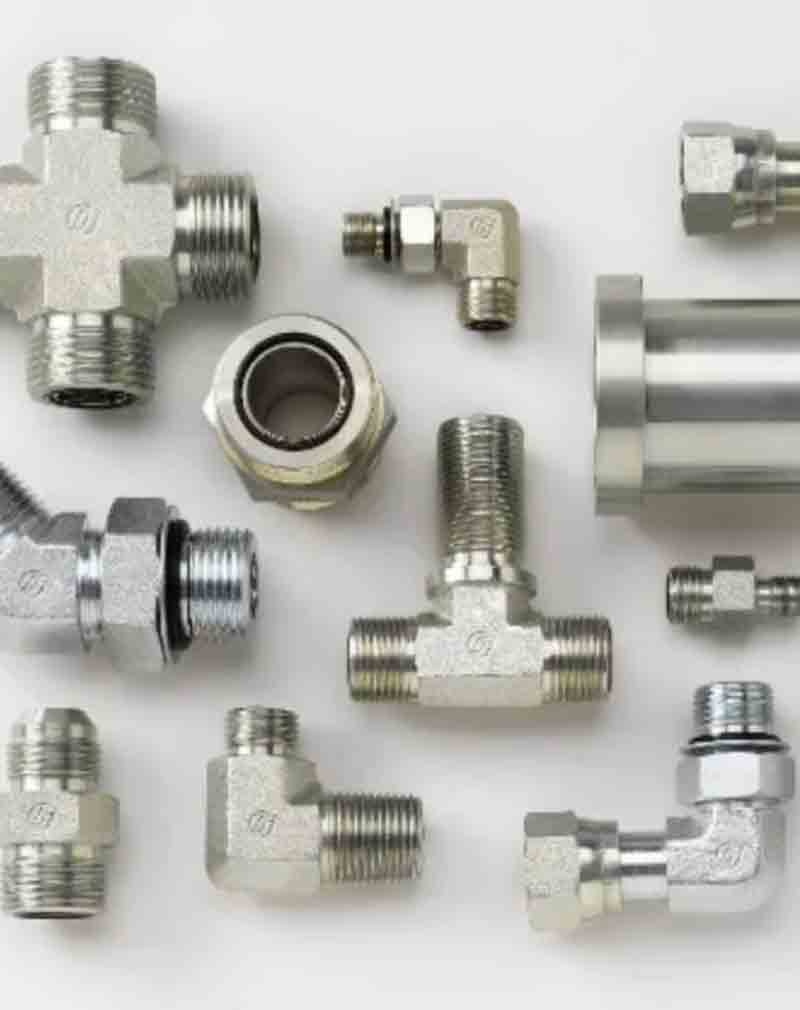 0218 Types
Instrumentation Pipe Fittings
Nipples, plugs, bushes, couplings, elbows, tees and crosses.
View ProductNeed Thermowells Built to Your Datasheet?
Send your instrument datasheet or process conditions — we will quote with drawing, material certificates and delivery schedule.