Diaphragm Seals for Difficult Media
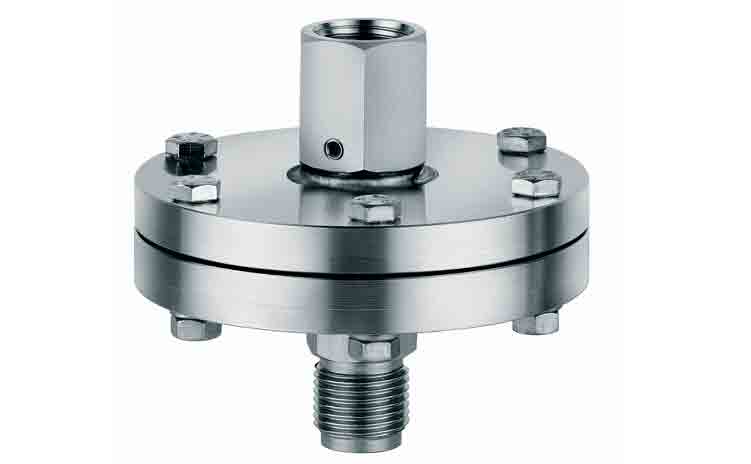
A diaphragm seal (also called a chemical seal) places a thin, flexible metal diaphragm between the process and the instrument. The space above the diaphragm is filled with an incompressible fill fluid, so process pressure acting on the diaphragm is transmitted hydraulically to the gauge, switch or transmitter — while the process itself never enters the instrument.
This protects the Bourdon tube or sensor from corrosive chemicals, viscous or crystallising fluids that would block a small port, slurries and extreme temperatures, and makes hygienic cleaning possible in food and pharma lines. Kalpataru seals are offered in SS 304, SS 316, SS 316L, Inconel, Monel and Hastelloy C, with other materials on request.
- Isolates corrosive media
- No clogging with viscous fluids
- Protects from hot process
- Hygienic, crevice-free designs
- Choice of fill fluids
- Heat code traceability
Diaphragm Seal Types
Process Connection Styles
Flanged
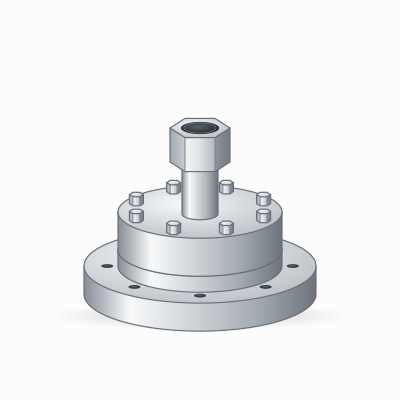
Large-area flush diaphragm mounted on an ANSI flange face. The large diaphragm gives good accuracy on low ranges and is easy to clean. Extended diaphragm versions reach into tank nozzles.
Threaded
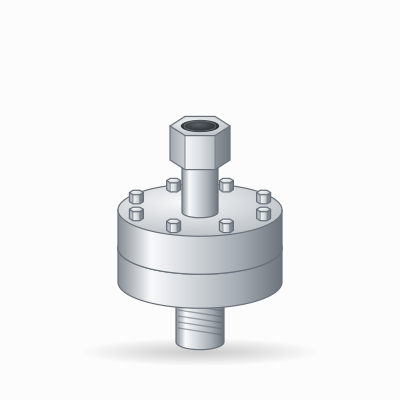
Compact seal with a male or female NPT / BSP process thread. The upper and lower housings are often bolted so the instrument can be removed without breaking the fill.
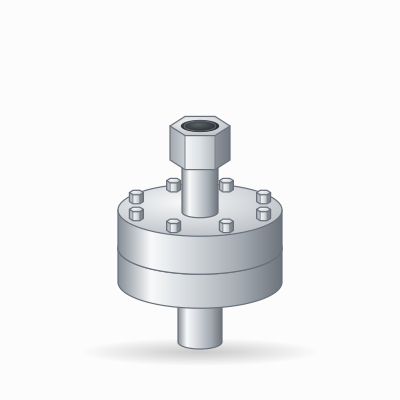
Welded
Diaphragm welded directly to the housing with socket weld or butt weld process ends — no gasket in the wetted path, for high pressure and hazardous services.
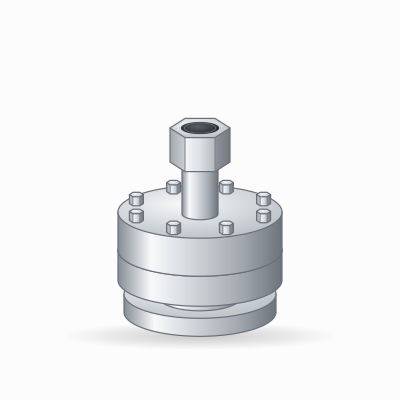
Sanitary
Tri-clamp style flush diaphragm with a polished wetted surface and no dead space, suited to clean-in-place (CIP) and steam-in-place (SIP) cleaning.
Specialised Designs
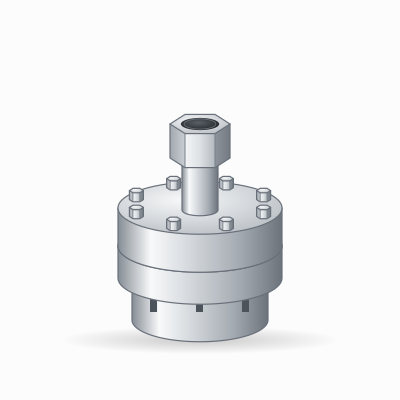
DIN
Seals built to DIN / EN flange dimensions (DN sizes, PN ratings) or DIN dairy union connections, for plants specified to European standards.
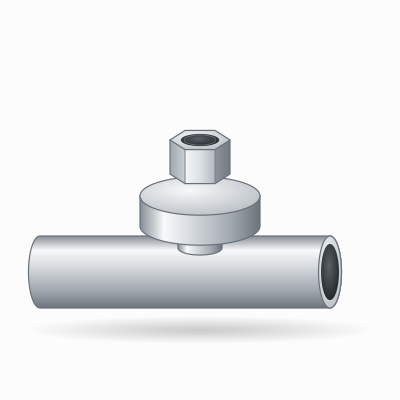
Inline
Flow-through seal with a full-bore cylindrical diaphragm. The process flows straight through, so there is no cavity to clog — ideal for slurries, pulp and viscous products.
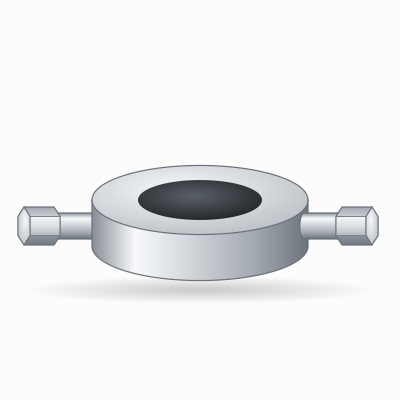
Flushing Ring
Ring fitted between the process flange and a flanged seal, with one or more flushing ports to clean deposits from the diaphragm or vent and drain without removing the seal.
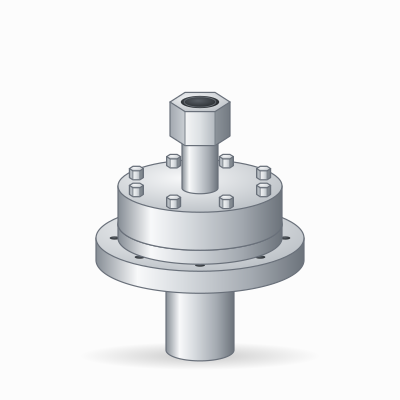
Other Connections
Pancake / wafer seals, capillary-connected remote seals, RTJ faces and special process connections are made to order from your datasheet or drawing.
Technical Specifications
| Product | Diaphragm Seals (Chemical Seals) for pressure gauges, pressure switches and transmitters |
|---|---|
| Seal Types | Flanged, threaded, welded, sanitary, DIN, inline, flushing ring & other connections |
| Instrument Connection | 1/4" or 1/2" NPT female standard; BSP & others on request |
| Body / Upper Housing | SS 304, SS 316, SS 316L, Inconel, Monel, Hastelloy C & others on request |
| Diaphragm Material | SS 316L standard; Hastelloy C, Monel, Inconel; Tantalum and PTFE coated on request |
| Fill Fluid | Silicone oil, glycerine, halocarbon (for oxygen / chlorine service), food grade fill |
| Mounting | Direct mount to the instrument or remote mount via capillary on request |
| Flushing Ports | 1/4" or 1/2" NPT on flushing rings, with plugs |
| Options | NACE MR0175 / MR0103 material compliance, PMI, third party inspection (TPI) |
| Certificates | EN 10204 3.1 material certificate, test certificate, third party inspection on request |
Material Grades
Stainless Steel
Nickel Alloys
Special Diaphragm Options (on request)
| Material | UNS No. | Bar Stock | Forgings / Flanges |
|---|---|---|---|
| SS 304 | S30400 | ASTM A479 / A276 | ASTM A182 F304 |
| SS 316 | S31600 | ASTM A479 / A276 | ASTM A182 F316 |
| SS 316L | S31603 | ASTM A479 / A276 | ASTM A182 F316L |
| Monel 400 | N04400 | ASTM B164 | ASTM B564 |
| Inconel 600 | N06600 | ASTM B166 | ASTM B564 |
| Inconel 625 | N06625 | ASTM B446 | ASTM B564 |
| Hastelloy C-276 | N10276 | ASTM B574 | ASTM B564 |
Chemical & Mechanical Properties
| Grade | C | Mn | Si | P | S | Cr | Ni | Mo | Others |
|---|---|---|---|---|---|---|---|---|---|
| SS 304 | 0.08 | 2.00 | 1.00 | 0.045 | 0.030 | 18.0–20.0 | 8.0–10.5 | — | N 0.10 |
| SS 316 | 0.08 | 2.00 | 1.00 | 0.045 | 0.030 | 16.0–18.0 | 10.0–14.0 | 2.0–3.0 | N 0.10 |
| SS 316L | 0.030 | 2.00 | 1.00 | 0.045 | 0.030 | 16.0–18.0 | 10.0–14.0 | 2.0–3.0 | N 0.10 |
| Monel 400 | 0.30 | 2.00 | 0.50 | — | 0.024 | — | 63.0 min | — | Cu 28.0–34.0, Fe 2.5 |
| Inconel 600 | 0.15 | 1.00 | 0.50 | — | 0.015 | 14.0–17.0 | 72.0 min | — | Fe 6.0–10.0, Cu 0.50 |
| Inconel 625 | 0.10 | 0.50 | 0.50 | 0.015 | 0.015 | 20.0–23.0 | 58.0 min | 8.0–10.0 | Nb+Ta 3.15–4.15, Fe 5.0 |
| Hastelloy C-276 | 0.010 | 1.00 | 0.08 | 0.04 | 0.03 | 14.5–16.5 | Balance | 15.0–17.0 | W 3.0–4.5, Fe 4.0–7.0 |
| Grade | Tensile Strength (MPa, min) | Yield Strength 0.2% (MPa, min) | Elongation (%, min) | Hardness (max) |
|---|---|---|---|---|
| SS 304 | 515 | 205 | 40 | 201 HB |
| SS 316 | 515 | 205 | 40 | 217 HB |
| SS 316L | 485 | 170 | 40 | 217 HB |
| Monel 400 | 480 | 170 | 35 | — |
| Inconel 600 | 550 | 240 | 30 | — |
| Inconel 625 | 827 | 414 | 30 | — |
| Hastelloy C-276 | 690 | 283 | 40 | — |
| Grade | Density (g/cm³) | Melting Range (°C) | Key Characteristic |
|---|---|---|---|
| SS 304 | 8.00 | 1400–1450 | General corrosion resistance, economical |
| SS 316 / 316L | 8.00 | 1375–1400 | Molybdenum for chloride & pitting resistance |
| Monel 400 | 8.80 | 1300–1350 | Sea water, hydrofluoric acid service |
| Inconel 600 | 8.47 | 1354–1413 | High temperature oxidation resistance |
| Inconel 625 | 8.44 | 1290–1350 | High strength, crevice corrosion resistance |
| Hastelloy C-276 | 8.89 | 1325–1370 | Severe oxidising & reducing chemicals |
Selection & Connection Tables
Fill Fluid — Typical Temperature Ranges
| Fill Fluid | Typical Temperature Range | Recommended For | Not Suitable For |
|---|---|---|---|
| Silicone Oil (standard) | -40 °C to +200 °C | General process, most chemicals, outdoor installations | Oxygen, chlorine, strong oxidisers |
| Silicone Oil (high temperature) | -10 °C to +300 °C | Hot process, heat transfer oils, direct mount on hot lines | Oxygen, chlorine, strong oxidisers |
| Glycerine | +10 °C to +150 °C | Indoor, general industrial, water and mild media | Low ambient temperatures, oxidising media |
| Halocarbon Oil | -40 °C to +175 °C | Oxygen, chlorine, hydrogen peroxide and oxidising media | Vacuum at high temperature |
| Food Grade Fill | -10 °C to +200 °C | Food, dairy, beverage and pharmaceutical processes | Oxygen, chlorine |
Diaphragm Material vs Media Suitability
| Diaphragm Material | Well Suited For | Avoid / Limitations | Availability |
|---|---|---|---|
| SS 316L | Water, steam, oils, hydrocarbons, mild acids and alkalis, food products | Hydrochloric acid, hot chlorides, wet chlorine | Standard |
| Hastelloy C-276 | Hot chlorides, wet chlorine, sulphuric & hydrochloric acid mixtures, sour service | Strongly oxidising hot nitric acid | Standard |
| Monel 400 | Sea water, brine, hydrofluoric acid, alkalis | Oxidising acids, ammonia | Standard |
| Inconel 600 / 625 | High temperature service, caustic soda, oxidising atmospheres | Hot hydrochloric acid | Standard |
| Tantalum | Hot concentrated hydrochloric, sulphuric and nitric acids | Hydrofluoric acid, hot strong alkalis | On request |
| PTFE Coated | Sticky, polymerising or corrosive media; anti-adhesion | Abrasive slurries, very high temperatures, vacuum | On request |
Connection Types — Availability
| Seal Type | Process Connection | Typical Sizes | Typical Ratings |
|---|---|---|---|
| Flanged | ASME B16.5 raised face, flush or extended diaphragm | 1" to 4" | 150# to 1500# |
| Threaded | NPT / BSP male or female | 1/4" to 1" | Design dependent |
| Welded | Socket weld / butt weld | 1/2" to 1" | Design dependent |
| Sanitary | Tri-clamp | 1" to 3" | Clamp dependent |
| DIN | EN 1092-1 flange / DIN 11851 dairy union | DN25 to DN100 | PN16 to PN100 |
| Inline | Flanged, threaded or tri-clamp ends, full bore | 1/2" to 2" | Design dependent |
| Flushing Ring | Between process flange and flanged seal, 1 or 2 ports | Matches seal flange | Matches seal flange |
| Other Connections | Pancake / wafer, RTJ, capillary remote mount | On request | On request |
Where Our Diaphragm Seals Are Used
Chemical & Acid Plants
Refinery & Petrochemical
Pharmaceutical Processing
Food, Dairy & Beverage
Water & Effluent Treatment
Pulp, Paper & Slurries
Oil & Gas Sour Service
Polymer & Resin Lines
Features & Advantages
Instrument Protection
The process never enters the gauge or transmitter, so corrosion, clogging and freezing inside the instrument are eliminated.
Matched Materials
Diaphragm, body and fill fluid are selected together for your media, so only the wetted parts need the premium alloy.
Easy Cleaning
Flush, sanitary and inline designs plus flushing rings keep the diaphragm clean without removing the instrument from service.
Full Traceability
Heat numbers recorded against mill certificates, with PMI and third party inspection available on request.
Frequently Asked Questions
When do I need a diaphragm seal?
Which fill fluid should I choose?
Does a diaphragm seal affect accuracy?
What is the purpose of a flushing ring?
Related Products
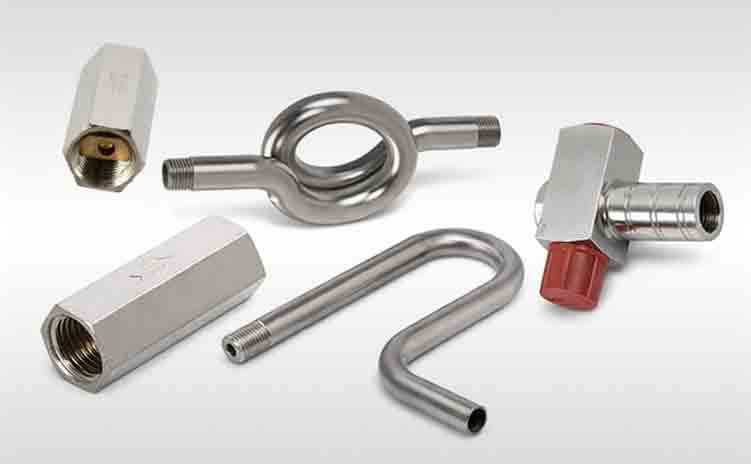 048 Types
Pressure Gauge Accessories
Snubbers, gauge cocks, gauge savers, syphons and cooling towers.
View Product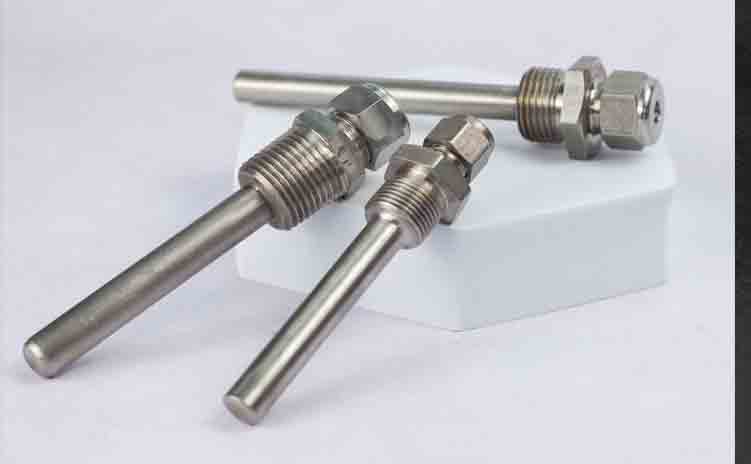 054 Types
 038 Types
Need a Seal for a Difficult Process?
Share the media, pressure range, temperature and instrument connection — we will recommend the seal type, diaphragm material and fill fluid.